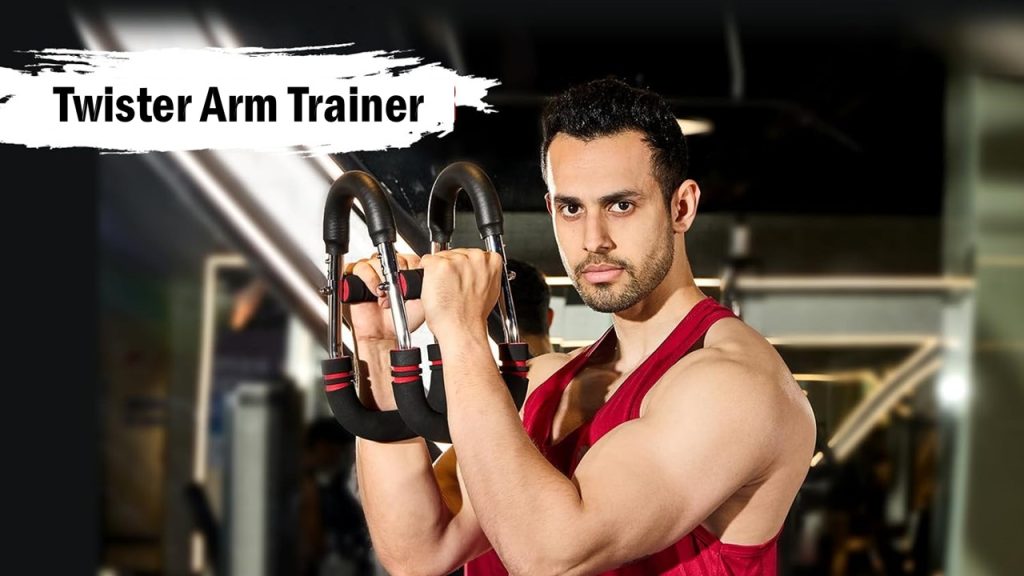
The Twister Arm Trainer has gained significant popularity among fitness enthusiasts seeking a compact, effective, and affordable solution for building upper body strength. Unlike bulky gym equipment that requires considerable space and investment, the Twister Arm Trainer offers a portable training experience capable of targeting multiple muscle groups through a variety of resistance-based movements.
Whether the goal is to build stronger arms, improve chest definition, enhance shoulder stability, or increase grip strength, this versatile fitness tool has become a valuable addition to many home workout routines. In this comprehensive review, we explore everything users need to know about the Twister Arm Trainer, including its features, benefits, performance, training effectiveness, safety considerations, and overall value.
What Is A Twister Arm Trainer?
The Twister Arm Trainer is a resistance-training device designed to strengthen the upper body through controlled compression and extension movements. It typically consists of ergonomic handles connected by a high-tension resistance mechanism, often utilizing hydraulic resistance, steel springs, or reinforced resistance systems.
The device allows users to perform various exercises that engage:
- Chest muscles
- Biceps
- Triceps
- Shoulders
- Forearms
- Upper back
- Grip muscles
- Core stabilizers
Its compact design makes it suitable for home gyms, office workouts, travel fitness routines, and supplemental strength training programs.
Key Features Of The Twister Arm Trainer
Adjustable Resistance Levels
One of the most attractive features of modern Twister Arm Trainers is adjustable resistance.
Many models allow users to select varying resistance levels, making the equipment suitable for:
- Beginners
- Intermediate athletes
- Advanced strength trainers
- Rehabilitation users
This adjustability enables progressive overload, a fundamental principle for long-term muscle development and strength gains.
Hydraulic Resistance Technology
Premium Twister Arm Trainers often utilize hydraulic resistance systems rather than traditional springs.
Benefits include:
- Smoother movement patterns
- Reduced joint stress
- Consistent resistance throughout the range of motion
- Improved safety
- Longer equipment lifespan
Hydraulic systems also eliminate the sudden rebound commonly associated with spring-loaded devices.
Ergonomic Handle Design
Comfort plays a critical role in workout performance.
Most quality Twister Arm Trainers feature:
- Non-slip grips
- Sweat-resistant materials
- Comfortable hand positioning
- Enhanced control during training
These ergonomic improvements help users maintain proper technique while reducing hand fatigue.
Portable and Space-Saving Construction
Unlike large strength machines, the Twister Arm Trainer requires minimal storage space.
Its compact design makes it ideal for:
- Apartments
- Small home gyms
- Dorm rooms
- Office environments
- Frequent travelers
Users can easily incorporate resistance training into their daily routines without dedicating an entire room to fitness equipment.
Muscle Groups Targeted By The Twister Arm Trainer
Chest Development
The chest is one of the primary muscle groups activated during Twister Arm Trainer exercises.
Compression movements closely mimic certain aspects of chest fly and pec deck exercises commonly performed in commercial gyms.
Regular use may help improve:
- Pectoral strength
- Muscle endurance
- Chest definition
- Functional pushing power
For individuals seeking greater upper-body aesthetics, chest activation remains one of the trainer’s strongest benefits.
Biceps and Triceps Strengthening
The arm muscles play a significant role during resistance-based compression exercises.
The biceps assist in stabilization and control, while the triceps contribute to extension and force generation.
Consistent training can support:
- Increased arm strength
- Enhanced muscular endurance
- Improved muscle tone
- Better functional performance
Many users appreciate the ability to train multiple arm muscles simultaneously.
Shoulder Engagement
The deltoid muscles work continuously throughout most Twister Arm Trainer movements.
This shoulder activation helps develop:
- Joint stability
- Muscular coordination
- Upper body control
- Athletic performance
Strong shoulders contribute to better posture and reduced injury risk during everyday activities.
Forearm and Grip Strength
Grip strength is often overlooked in traditional training programs.
The Twister Arm Trainer naturally challenges:
- Finger flexors
- Wrist stabilizers
- Forearm muscles
- Hand endurance
Improved grip strength carries over into numerous sports and daily tasks.
Benefits Of Using A Twister Arm Trainer
Convenient Home Workouts
One of the greatest advantages of the Twister Arm Trainer is convenience.
Users can complete effective training sessions at home without:
- Gym memberships
- Expensive equipment
- Long commutes
- Waiting for machines
This accessibility helps promote consistency, which remains one of the most important factors in fitness success.
Time-Efficient Training
Busy schedules often make lengthy workouts difficult.
The Twister Arm Trainer allows users to perform high-intensity resistance exercises in short sessions.
Even 10 to 15 minutes per day can provide meaningful training stimulus when combined with proper effort and consistency.
Progressive Strength Development
As resistance increases over time, muscles adapt by becoming stronger and more resilient.
The trainer supports progressive overload through adjustable resistance settings, helping users continue making improvements as fitness levels advance.
Enhanced Muscular Endurance
Beyond pure strength, the trainer can improve muscular endurance.
Higher repetition sets challenge muscles to sustain effort over longer periods, benefiting both athletic performance and everyday functionality.
Twister Arm Trainer Workout Techniques
Standard Chest Press Movement
This foundational exercise emphasizes the chest, shoulders, and triceps.
Users bring the handles together using controlled force while maintaining proper posture and core engagement.
The movement should remain smooth and deliberate rather than explosive.
Overhead Compression Exercise
Raising the trainer overhead increases shoulder activation.
This variation targets:
- Deltoids
- Upper chest
- Triceps
- Stabilizing muscles
It provides additional variety and prevents workout monotony.
Diagonal Press Variation
Changing movement angles shifts muscular emphasis and recruits additional stabilizing muscles.
Diagonal presses can enhance:
- Functional strength
- Coordination
- Movement efficiency
Multiple angles help create a more comprehensive training experience.
Isometric Hold Training
Holding the trainer in a compressed position develops static strength and endurance.
Isometric exercises can increase muscle tension without repetitive joint movement, making them useful additions to many workout programs.
Twister Arm Trainer vs Traditional Gym Equipment
| Feature | Twister Arm Trainer | Traditional Gym Machines |
| Portability | Excellent | Poor |
| Space Requirements | Minimal | Significant |
| Cost | Affordable | Expensive |
| Ease of Use | High | Moderate |
| Resistance Training | Effective | Effective |
| Home Use | Excellent | Limited |
| Maintenance | Low | Moderate |
The Twister Arm Trainer offers exceptional convenience while still delivering meaningful resistance training benefits.
Who Should Use A Twister Arm Trainer?
The Twister Arm Trainer appeals to a wide range of users.
Ideal candidates include:
Beginners
New exercisers benefit from the simple learning curve and adjustable resistance options.
Busy Professionals
Individuals with limited workout time can perform quick and efficient training sessions almost anywhere.
Home Fitness Enthusiasts
Those building home gyms often appreciate equipment that delivers results without consuming valuable space.
Older Adults
Controlled resistance training can support muscle maintenance, joint stability, and functional strength when used appropriately.
Athletes
Athletes may utilize the trainer as a supplemental tool to improve upper-body endurance and muscular coordination.
Safety And Proper Usage
Proper form remains essential for maximizing results and minimizing injury risk.
Important guidelines include:
- Begin with appropriate resistance levels
- Maintain controlled movement patterns
- Avoid jerking motions
- Keep shoulders aligned
- Engage core muscles throughout each exercise
- Increase resistance gradually
Users should prioritize technique before attempting higher resistance settings.
Regular maintenance and inspection of the equipment can further enhance safety.
Advantages And Disadvantages
Pros
- Compact and portable
- Adjustable resistance options
- Effective upper-body training
- Suitable for home use
- Affordable compared to gym equipment
- Easy storage
- Beginner-friendly
- Supports progressive overload
- Enhances grip strength
- Low maintenance requirements
Cons
- Limited lower-body training
- Not a complete replacement for full gym programs
- Results depend on consistent usage
- Resistance ceiling may not satisfy elite strength athletes
Twister Arm Trainer Specifications
Resistance Range
One of the most impressive aspects of modern Twister Arm Trainers is their adaptability. Many current models feature resistance settings ranging from approximately 22 pounds to 440 pounds. This enormous range allows a single device to accommodate beginners, recreational users, and advanced strength trainers alike. Rather than purchasing multiple devices as strength improves, users simply adjust the resistance dial to match their current fitness level.
| Feature | Typical Specification |
| Resistance Range | 22–440 lbs |
| Resistance Type | Hydraulic |
| Target Muscles | Chest, Arms, Shoulders, Back |
| Portability | High |
| Storage Requirement | Minimal |
| User Level | Beginner to Advanced |
Materials and Construction
Quality Twister Arm Trainers commonly use high-density carbon steel, reinforced ABS materials, hydraulic cylinders, and ergonomic grip surfaces. Several leading models incorporate reinforced screw systems and enclosed hydraulic chambers designed to improve durability and longevity. These design choices help ensure that the equipment can withstand repeated use without compromising safety.
Is The Twister Arm Trainer Worth Buying?
For individuals seeking a practical, affordable, and efficient upper-body training solution, the Twister Arm Trainer represents excellent value. Its combination of portability, versatility, and progressive resistance makes it suitable for a broad range of fitness levels.
The device effectively targets major upper-body muscle groups while requiring minimal space and maintenance. Whether used as a primary home workout tool or as a supplemental training device, it offers a convenient way to improve strength, muscular endurance, and overall fitness.
Users who remain consistent with their training routines often discover that the Twister Arm Trainer becomes one of the most frequently used pieces of equipment in their fitness arsenal.
Final Verdict
The Twister Arm Trainer stands out as a versatile and highly practical strength-training tool for home fitness enthusiasts. Its ability to engage the chest, arms, shoulders, forearms, and stabilizing muscles through compact resistance training makes it an attractive option for beginners and experienced users alike.
With adjustable resistance, portable construction, ergonomic design, and effective muscle activation, the Twister Arm Trainer delivers substantial value at a relatively affordable price point. For anyone looking to build upper-body strength without investing in large gym equipment, this training device remains one of the most effective and convenient solutions available today.
FAQs
Q: Is a Twister Arm Trainer effective for building muscle?
Yes. When used consistently with progressive resistance and proper nutrition, it can contribute to muscle growth, particularly in the chest, shoulders, arms, and forearms.
Q: Can beginners use a Twister Arm Trainer?
Absolutely. Most hydraulic models offer adjustable resistance starting at approximately 22 pounds, making them beginner-friendly.
Q: Are hydraulic Twister Arm Trainers safer than spring models?
Generally yes. Hydraulic systems provide smoother resistance and reduce rebound-related risks associated with older spring-based designs.
Q: Which muscles benefit the most from Twister Arm Trainer workouts?
The primary muscles include the chest, shoulders, triceps, biceps, forearms, and upper back stabilizers.
Q: Can a Twister Arm Trainer replace a gym membership?
For upper-body training and convenience, it can be highly effective. For comprehensive full-body development, it works best as part of a broader fitness program.